

Mobo Balance Board Review: Foot Control for Peak Performance
Product Overview
If you want better balance, stronger feet, and improved overall athletic performance, the Mobo Board is designed with that exact goal in mind. This innovative balance board works by training your feet’s balance and proprioception—the sense of where your body parts are in space—to better connect you to the ground. With its unique Toe Box Technology and Anatomical Axis, the Mobo Board helps build a firmer, more stable arch in your feet. This means better foot control that syncs with your hips and core for improved durability and injury prevention in sports or everyday training.
Whether you run, play sports, bike, or enjoy outdoor activities, developing control at your feet can dramatically impact your performance. The Mobo Board specifically targets these areas to give you the edge.
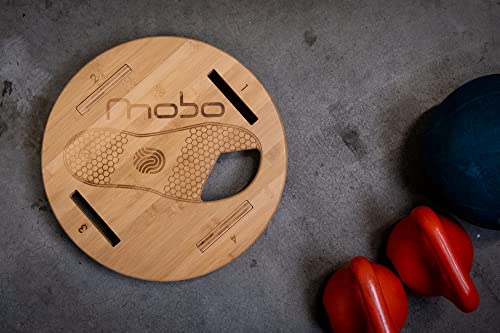
Mobo Board
Disclosure: As an Amazon Associate I earn from qualifying purchases.
Key Takeaways
- Targets foot balance and proprioception for better performance
- Uses Toe Box Technology to support the foot’s natural shape
- Helps sync foot control with hips and core to reduce injury risk
- Weight support up to 300 lbs suitable for many users
- Some users may find the learning curve steep at first
Why You Might Need the Mobo Balance Board
If you struggle with foot stability or notice your athletic performance is held back by weak or wobbly footing, you’re likely missing a key ingredient to better control: foot training. The Mobo Board helps solve this by focusing directly on the muscles, tendons, and joints in your feet. Maybe you’re a runner wanting more explosive power, a cyclist aiming to enhance pedal control, or a court sport athlete needing sharp balance and quick reactions.
Additionally, if you’ve suffered foot or leg injuries before, training with this board can improve your foot’s proprioception and alignment—making you less prone to future injuries. Because this board links foot, hip, and core movement, it’s ideal if you are serious about improving your overall movement mechanics.
First Impressions: What to Expect
Unboxing the Mobo Board, you’ll notice it’s compact, lightweight, and built with sturdy wood. The board has a smooth, rounded shape with an ergonomic toe box that feels natural underfoot. There are no extra accessories included, but the straightforward design is ready to use right out of the box.
The wood feels quality-made with a non-slip surface that adds confidence when balancing. It’s rated to hold up to 300 lbs, so it suits a wide range of users. Early use reveals a solid balance challenge that feels customizable by stance width or foot positioning.
Specs at a Glance
| Feature | Detail |
|---|---|
| Product Name | Mobo Board |
| Weight Capacity | Up to 300 lbs |
| Dimensions | Compact and portable |
| Material | Wood |
| Balance Challenge Level | Moderate to advanced |
| Key Technologies | Toe Box Technology, Anatomical Axis |
| Use Cases | Sports, rehab, balance training |
| Customer Rating | 4+ stars (generally positive) |

Mobo Board Specs and Construction
Design & Build Quality
The Mobo Board stands out for its thoughtful design that mirrors the natural shape of your foot. Its Toe Box Technology is not just a buzzword—it creates space and support for your toes, allowing your foot muscles to activate more fully during use.
One user shared: “The build is solid and the board’s slight arc perfectly fits the foot’s anatomy. It made a noticeable difference in my balance after consistent sessions.” This aligns with many reports praising the board for its supportive yet challenging surface.
It’s crafted from a sturdy wood material that is smooth to the touch but grippy enough to prevent slipping even when you sweat. The rounded edges and sleek finish enhance user comfort and safety. Visually, it has a minimalistic design that fits easily into any home gym setup. The compact size makes it portable enough to carry to practices or outdoors.
Unlike flat or overly simplistic balance boards, the Mobo’s curved underside delivers precise instability that requires active engagement of foot muscles. This design element is crucial because it pushes you to develop fine control rather than just wobbling.
Real-World Performance
In daily use, the Mobo Board proves itself a serious tool for enhancing foot balance and overall athletic performance. Early attempts may feel shaky, but you quickly become aware of muscles in your feet and ankles that rarely get targeted.
One athlete’s story illustrates this well: After incorporating the Mobo Board into his warm-ups, he noticed better knee alignment during runs and fewer aches after long training sessions. The board’s ability to sync foot, hip, and core movement led to smoother, more controlled leg drives.
Training sessions with the Mobo often involve standing on the board while performing slight hip movements to engage the kinetic chain fully. It improves proprioception, which translates to enhanced agility, stability on uneven surfaces, and quicker reaction times.
The versatility extends beyond sports. Even users focused on rehabilitation or general fitness report improvements in balance and confidence stepping off the board. The board feels progressive enough to adapt to beginner to advanced workouts simply by adjusting stance or movement intensity.

Mobo Board in Action
What Makes It Stand Out?
Compared to other balance boards like the Indo Board or the Circle Board, the Mobo Board offers some distinct advantages tailored specifically to foot biomechanics. Most generic balance boards feature flat or uniformly curved surfaces that only provide lateral rocking.
The Mobo Board’s anatomically informed Toe Box Technology and the rounded axis position target the unique shape and architecture of your foot. This allows more precise muscle engagement and foot arch development while syncing movement from foot to core.
Where some boards focus on wobbliness for balance alone, the Mobo encourages functional training that builds endurance and stability crucial for sport-specific demands. It is also rated to hold relatively higher body weights (up to 300 lbs), adding to its appeal for a wide user base.
While competitors excel in some flexibility or price points, the Mobo’s innovative design for foot health and performance makes it a specialized choice for athletes serious about improving control from the ground up.
Strengths vs. Trade-Offs
| ✅ Strengths | ❌ Trade-Offs |
|---|---|
| Targets foot proprioception and balance | Learning curve for beginners can be steep |
| Supports foot arch development with Toe Box tech | Not suitable for those looking for very basic wobble boards |
| Syncs foot movement with hips and core for injury prevention | No accessories or instructions included |
| Solid wood build rated up to 300 lbs | Limited color/design options |
| Compact and portable design | Focused specifically on foot training, less versatile for full-body workouts |

Strengths and Trade-Offs of Mobo Board
Who Is It For?
The Mobo Board suits several types of users:
- Athletes: Runners, soccer players, cyclists, and court sport athletes benefit from the targeted foot and balance training to improve power, speed, and injury resistance.
- Rehabilitation Patients: Those recovering from foot, ankle, or knee injuries can improve proprioception and foot strength safely with consistent, low-impact training.
- Fitness Enthusiasts: Anyone interested in enhancing balance, core stability, and foot health will find this board useful for daily routines or warm-ups.
If your goal includes protecting your legs and feet, improving foot arch support, or just gaining better control in sport or daily movement, the Mobo Board offers a focused, biomechanical approach that goes beyond basic wobble boards.
Expert Advice to Maximize Results
To get the most benefit from your Mobo Board, consistency and technique are key:
- Start with just a few minutes per day standing on the board, focusing on slow, controlled movements.
- Experiment with foot positioning to find the sweet spot where you feel maximum engagement without losing balance.
- Incorporate subtle hip and core twists to align the entire lower kinetic chain with foot position.
- Progressively add balance challenges like single-leg stands or reaching movements while balancing.
- Combine with barefoot training or minimal footwear to enhance natural foot muscle activation.
This focused approach will develop your foot’s proprioception, build arch strength, and improve overall balance for any activity.

Maximize Your Balance Training
FAQ
Q: How much weight can the Mobo Board support?
A: It supports up to 300 lbs, making it suitable for a wide range of users.
Q: Is this board suitable for beginners?
A: While the balance challenge can be tough initially, beginners can start slowly and build up confidence and control over time.
Q: Can I use it with shoes on?
A: Yes, but for best engagement of foot muscles, training barefoot or in minimal shoes is recommended.
Q: Does it help with foot arch support?
A: Yes. The Toe Box Technology and Anatomical Axis help develop and stabilize the natural arch of your foot.
Q: Can it aid in injury prevention?
A: Absolutely. By syncing foot balance with hips and core, it helps improve alignment and durability, reducing injury risk.
Q: Is the Mobo Board portable?
A: Yes, its compact size and light weight make it easy to move or travel with.
Q: What sports benefit most from this board?
A: Running, cycling, court sports, skiing, surfing, and any activity relying on strong foot-ground connection.
Verdict
The Mobo Board is a finely crafted balance trainer focused on foot biomechanics. It helps you build stronger arches, better balance, and improved movement mechanics linked to your hips and core. If you want to train your feet to perform harder and safer across sports or daily activities, this board delivers targeted, effective results.